
Pain, Work, and the Body
Out Stealing HorsesThe novel links practical labor and bodily pain to the characters’ attempts to master time, fear, and vulnerability.
increasing Bearing strength in each event
 decreasing
Bearing strength in each eventdecreasingAvoiding the Nettles
Avoiding the Nettles
An Amateur’s Hesitation
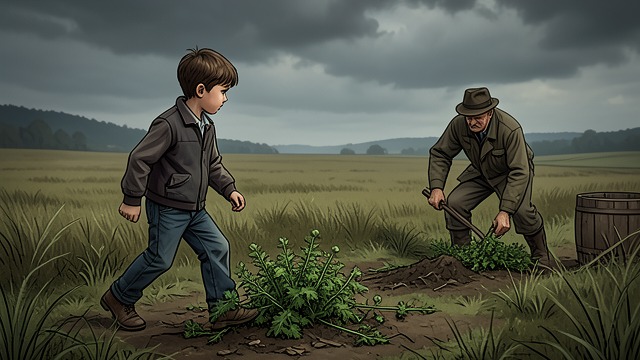
Trond cuts the grass behind the cabin but skirts a patch of nettles because he expects them to hurt. His father asks why he has left them standing.
A Lesson in Agency
His father pulls the nettles out with bare hands and tells him that he decides when it will hurt. Trond feels ashamed and quickly changes his gait.
The lesson does not promise that pain can be avoided. It asks Trond to distinguish what happens to him from the fear that makes him withdraw.
The Work Rhythm
The Work Rhythm
Time Made Physical
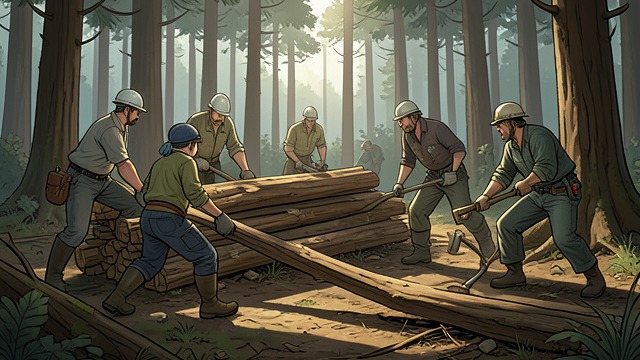
The workers fell, trim, and stack timber through long days. As tasks repeat, the start and finish matter less than the shared rhythm of effort, rest, food, and sleep.
A Boy Among Adults
Trond is sometimes forced to rest when others see how exhausted he has become. He experiences the labor as intoxicating and feels himself becoming part of the forest.
Work gives time a concrete shape, unlike the vague duration of waiting for his father. Its order is satisfying, but it cannot hold back change or guarantee success.
Pain in the Karlstad Street

Pain in the Karlstad Street
Physical Strength and Anger
After the summer’s work, Trond feels strong enough to threaten a stranger. His clenched fist makes the possible consequences of action immediate and bodily.
The Pain of Restraint
He releases his fist and lets the stranger go. Later, the marks of his fingernails remain in his palm as a physical trace of the decision.
The episode gives the earlier lesson a moral dimension: choosing what to endure may mean resisting the release of anger. Trond feels disappointment as well as relief.
The Old Body at Work
The Old Body at Work
A Chosen Routine
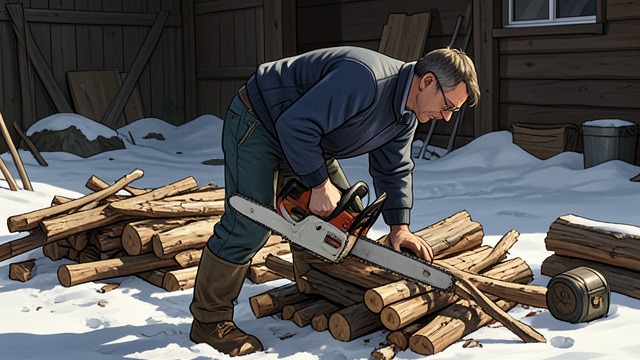
At The Top, Trond cuts and stacks firewood, sharpens his chainsaw, and tries to complete practical tasks himself. He values the way labor fills time without making it disappear.
Limits Become Visible
His back is stiff, and clearing snow by hand would be impossible. The fallen birch and later dizziness reveal that even well-planned work depends on a body that can fail.
Labor provides dignity, but not invulnerability. Trond must decide whether accepting assistance contradicts independence or is simply another way to continue living there.
Help from a Neighbor
Help from a Neighbor
Shared Physical Effort
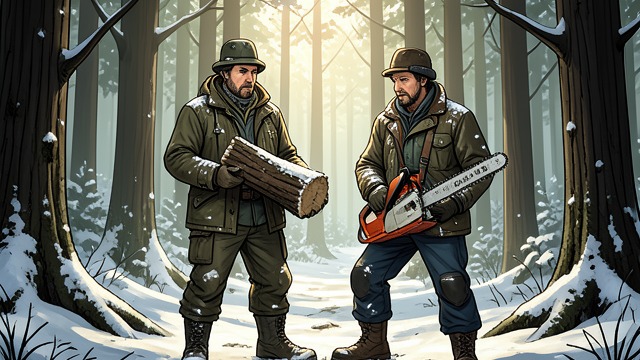
Lars Haug helps Trond cut the fallen tree and discusses the coming winter. Their work shows the value of practiced movement and cooperation.
Independence Reconsidered
Trond notices that Lars’s confidence helps him continue. He is uneasy that another person’s encouragement has become part of his strength, but he still agrees to go on.
The moment reframes self-reliance: doing a task oneself need not mean doing it alone. Labor becomes a way of meeting another person as well as managing the house.
A week into the 1948 summer
During the summer logging
Autumn 1948
Early November 1999
The day Lars Haug clears the birch
